Table of Contents
- Understanding the Importance of Proper Leopard Gecko Care
- Temperature: Creating a Perfect Thermal Gradient
- Humidity: Striking the Right Balance
- Feeding Schedule: What, When, and How Much
- Common Pitfalls and How to Avoid Them
- Handling and Taming Your Leopard Gecko
- Seasonal Adjustments
- Final Checklist for New Keepers
Understanding the Importance of Proper Leopard Gecko Care
Leopard geckos (Eublepharis macularius) are among the most popular reptile pets in the United States. Their docile nature and relatively simple requirements make them excellent companions--but only when their environmental needs are met with precision. Unlike many desert reptiles, leopard geckos are crepuscular, meaning they are most active at dawn and dusk. This behavior dictates their need for specific temperature gradients, humidity levels, and feeding schedules that mimic their natural habitat in the arid grasslands of Afghanistan, Pakistan, and India.
Getting these three factors right is the difference between a gecko that merely survives and one that thrives. In this guide, we break down the exact numbers, tool recommendations, and schedules you need to follow for optimal health.
Temperature: Creating a Perfect Thermal Gradient
Leopard geckos are ectothermic, relying on external heat sources to regulate their body temperature. A proper thermal gradient--a warm side and a cool side--allows them to thermoregulate naturally.
Warm Side (Basking Zone)
The warm side of the enclosure should maintain a surface temperature of 90-94°F (32-34°C). This is typically provided by an under-tank heater (UTH) or a low-wattage heat lamp placed on one side. Never use heat rocks--they can cause severe burns. Use a thermostat to prevent overheating.
Cool Side
The cool side should stay between 70-75°F (21-24°C). This creates a gradient that allows your gecko to cool down after digesting a meal or when overheated.
Ambient Temperature
Overall enclosure air temperature should be around 75-85°F (24-29°C) during the day. Nighttime drops to 65-70°F (18-21°C) are acceptable and even beneficial for simulating natural cycles.
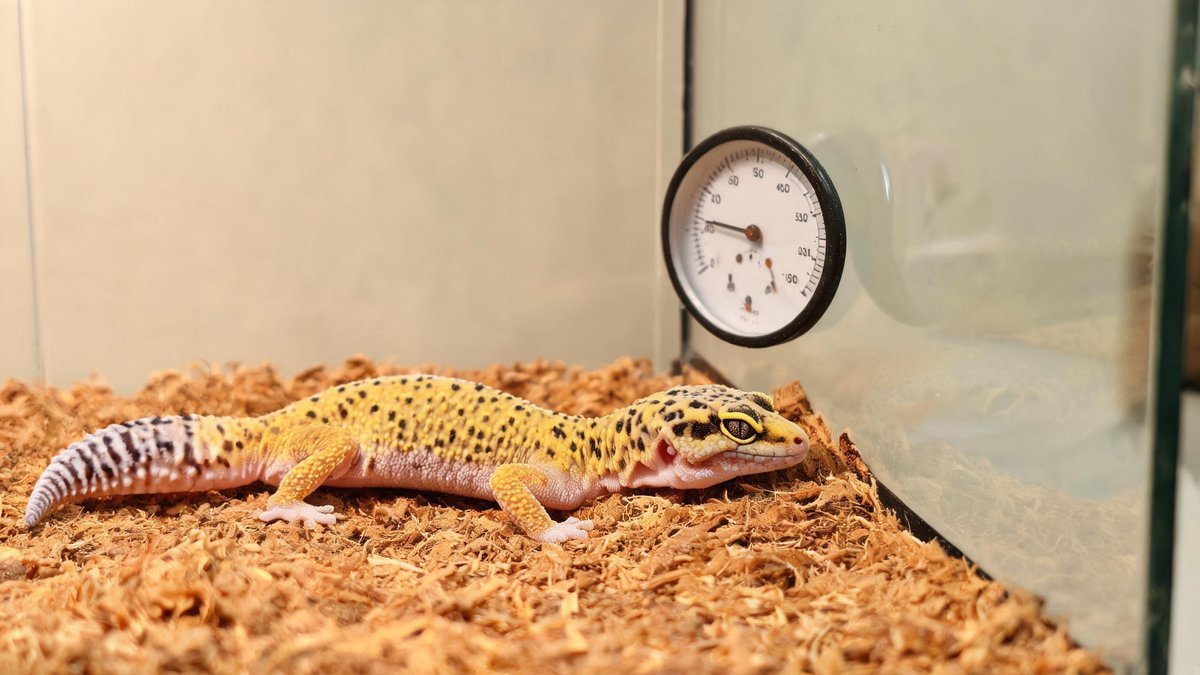
Expert Tip: Always measure temperatures with a digital probe thermometer or infrared temperature gun. Stick-on thermometers are notoriously inaccurate and can lead to dangerous gradients.
Humidity: Striking the Right Balance
Leopard geckos require moderate humidity--higher than many assume. In the wild, they shelter in humid burrows during the day. Captive humidity levels should be:
- General enclosure: 30-40% relative humidity
- Moist hide: 70-80% humidity
A moist hide is a non-negotiable accessory. Fill a small container (like a deli cup with an entrance hole) with damp sphagnum moss or paper towels. Place it on the warm side. This humid retreat assists with shedding and hydration. Check weekly for mold and replace the substrate as needed.
Use a digital hygrometer to monitor enclosure-wide humidity. Too low (<20%) can lead to stuck shed, especially on toes and tail tips. Too high (>50%) promotes respiratory infections and bacterial growth.
How to Increase Humidity
- Mist the enclosure lightly each morning (avoid soaking the substrate)
- Use a larger water dish near the warm side
- Add live or fake plants to retain moisture
How to Decrease Humidity
- Improve ventilation (screen top, more air holes)
- Switch to a less water-retentive substrate like tile or paper towels
- Remove wet spot immediately
Feeding Schedule: What, When, and How Much
Leopard geckos are insectivores. Their diet should consist of live, gut-loaded insects. Never feed wild-caught bugs, which can carry parasites or pesticides.
Staple Feeders
- Crickets: High in protein; provide a balanced diet when gut-loaded
- Dubia roaches: Excellent nutrition, soft-bodied, easy to digest
- Mealworms: High in fat; use as treats or variety (limit for adults)
- Black soldier fly larvae: Rich in calcium without dusting
Feeding Frequency by Age
| Age | Frequency | Amount per Feeding |
|---|---|---|
| Hatchlings (0-4 months) | Daily | 5-7 small crickets or equivalent |
| Juveniles (4-10 months) | Every other day | 8-10 medium insects |
| Adults (>10 months) | 2-3 times per week | 6-8 large insects |
Allow your gecko to eat as much as it can in about 10-15 minutes. Remove uneaten insects to prevent stress or nibbling while the gecko sleeps.
Supplements: Calcium and Vitamin D3
Gut-load feeder insects 24 hours before feeding with high-calcium produce (e.g., collard greens, carrots). Then dust insects with a calcium powder containing vitamin D3 at every feeding for juveniles, and every other feeding for adults. A multivitamin supplement should be used once a week.
Leopard geckos can synthesize vitamin D3 from UVB light, but many keepers achieve success without it by using supplemented diet. However, a low-level UVB bulb (5-7%) placed 12-18 inches away can improve appetite and bone density. Always provide a shaded retreat to avoid overexposure.
Common Pitfalls and How to Avoid Them
- Using heat rocks: They heat unevenly and cause burns. Stick to under-tank heaters or ceramic heat emitters.
- Ignoring the moist hide: Failure to provide one leads to stuck shed, especially on toes, which can result in digit loss.
- Overfeeding adults: Obesity shortens lifespan. Stick to the schedule and monitor body condition--tail width should be roughly the same as the neck.
- Feeding only mealworms: Mealworms are fatty and can cause hepatic lipidosis if overused. Vary your feeder insects.
Handling and Taming Your Leopard Gecko
Leopard geckos are among the most handleable reptiles, but rushing the taming process creates stress and defensiveness. Wait at least two weeks after bringing your gecko home before attempting any handling — this allows it to settle and begin eating regularly. Start by placing your hand flat in the enclosure for 5-10 minutes each evening without attempting to touch the gecko. Let it approach and investigate your hand on its own terms. Once your gecko walks onto your hand voluntarily, lift it just slightly above the substrate for a few seconds, then lower it back down. Gradually extend handling sessions to 10-15 minutes, always supporting the entire body with open palms. Never grab the tail — leopard geckos can drop it as a defense mechanism. While the tail regenerates, the process drains energy reserves and the replacement never looks quite the same as the original.
Seasonal Adjustments
In winter, some keepers implement a cooling period (brumation) of 6-8 weeks at 65-70°F to mimic natural cycles. During this time, reduce feeding to once a week. Always consult a veterinarian before initiating brumation.
Conversely, in summer, ensure enclosures don't exceed 95°F (35°C) on the warm side. Overheating can be fatal. Use fans in the room or move the enclosure to a cooler area if needed.
Final Checklist for New Keepers
Before bringing your leopard gecko home, verify you have:
- A 20-gallon long tank (minimum for one adult)
- A thermostat-controlled UTH on one side
- A digital thermometer and hygrometer
- A moist hide with sphagnum moss
- At least two other hides (warm and cool)
- A shallow water dish (cleaned daily)
- A supply of gut-loaded crickets or roaches
- Calcium with D3 and multivitamin powders
With meticulous temperature management, proper humidity balance, and a disciplined feeding schedule, your leopard gecko will reward you with years of fascinating behavior and robust health. For further guidance, consult a reptile-savvy veterinarian or join reputable herpetological societies.
Proper nutrition goes far beyond simply filling a bowl twice a day. Every life stage brings different dietary requirements. Growing puppies and kittens need controlled calcium and phosphorus ratios for healthy bone development. Adult pets thrive on maintenance formulas that match their activity level. Senior animals often benefit from increased protein to preserve muscle mass and added joint supplements like glucosamine and chondroitin. The quality of ingredients matters significantly -- named animal proteins should appear first on the ingredient list, and artificial preservatives, colors, and by-products are best avoided altogether.
Regular veterinary checkups form the backbone of preventive pet care. Most adult dogs and cats benefit from an annual wellness exam, while seniors and animals with chronic conditions may need visits every six months. During these appointments, your veterinarian can catch emerging health issues before they become serious, update vaccinations, and perform routine bloodwork that reveals early signs of kidney disease, diabetes, or thyroid disorders. Many pet owners skip these visits when their animal appears healthy, but preventive care is ultimately more affordable and less stressful than emergency treatment.
Knowing when to seek veterinary attention can save your pet's life. Sudden changes in appetite, water intake, or energy levels warrant a call to your vet. Vomiting or diarrhea lasting more than 24 hours, unexplained weight loss, difficulty breathing, and persistent limping are all red flags that should not be ignored. Likewise, if your pet is hiding more than usual, showing aggression when touched, or refusing to use the litter box or go outside, these behavioral shifts often signal underlying discomfort. Trust your instincts -- you know your pet's normal better than anyone.
Dental health is one of the most overlooked aspects of pet care, yet dental disease affects over 80 percent of dogs and cats by age three. Without regular care, plaque hardens into tartar, leading to inflamed gums, tooth loss, and bacteria that can enter the bloodstream and damage the heart, liver, and kidneys. Daily brushing with pet-safe toothpaste is the gold standard, but dental chews, water additives, and specially formulated diets can also help reduce buildup. Annual professional cleanings under anesthesia remain essential for removing tartar below the gum line where brushing cannot reach.
Physical activity is as vital for pets as it is for people, influencing not just weight management but also mental health and behavior. Dogs generally need 30 to 60 minutes of purposeful exercise daily, adjusted for breed, age, and health status. Cats benefit from interactive play sessions that mimic hunting behaviors. Inadequate exercise is a leading cause of obesity, which now affects over 50 percent of domestic pets and contributes to arthritis, diabetes, and reduced lifespan. A tired pet is a happy, well-behaved pet.
Mental stimulation is just as important as physical exercise for your pet's overall well-being. Boredom in pets often manifests as destructive behaviors such as chewing furniture, excessive barking, or scratching carpets. Puzzle toys, treat-dispensing balls, and hide-and-seek games engage your pet's natural problem-solving instincts. Rotating toys every few days prevents habituation and keeps novelty alive. For cats, window perches and cat trees provide valuable environmental enrichment. For dogs, nose work games and basic trick training strengthen your bond while tiring them mentally in ways a simple walk cannot match.
Regular grooming is about far more than keeping your pet looking good. Brushing removes loose fur and distributes natural skin oils, preventing mats that can pull painfully on the skin and trap moisture that leads to bacterial infections. Long-haired breeds may need daily brushing to prevent tangles. Nail trims prevent overgrowth that can alter gait and lead to joint pain over time. Ear cleaning helps prevent infections, particularly in floppy-eared breeds. Routine coat care gives you an opportunity to inspect for lumps, bumps, parasites, or skin abnormalities that might otherwise go unnoticed until they become serious health concerns.
Bringing a new pet home is an exciting milestone, but the first few weeks set the foundation for your entire relationship. Create a quiet, safe space where your pet can decompress before exploring the rest of your home. Dogs benefit from a consistent daily schedule for meals, walks, and potty breaks. Cats appreciate vertical space like cat trees or shelves where they can observe from a safe height. Introduce family members gradually and let your pet set the pace for interactions. Patience during this adjustment period pays enormous dividends in the trust and bond you will build over the coming years.