Table of Contents
- Common Human Foods That Are Deadly to Dogs and Cats
- Houseplants and Flowers That Send Pets to the Emergency Room
- Cleaning Products and Chemicals You Must Lock Away
- Over-the-Counter and Prescription Medications That Harm Pets
- Build a Pet-Safe Home Without Sacrificing Comfort or Style
- What to Do If Your Pet Ingests Something Toxic
Common Human Foods That Are Deadly to Dogs and Cats
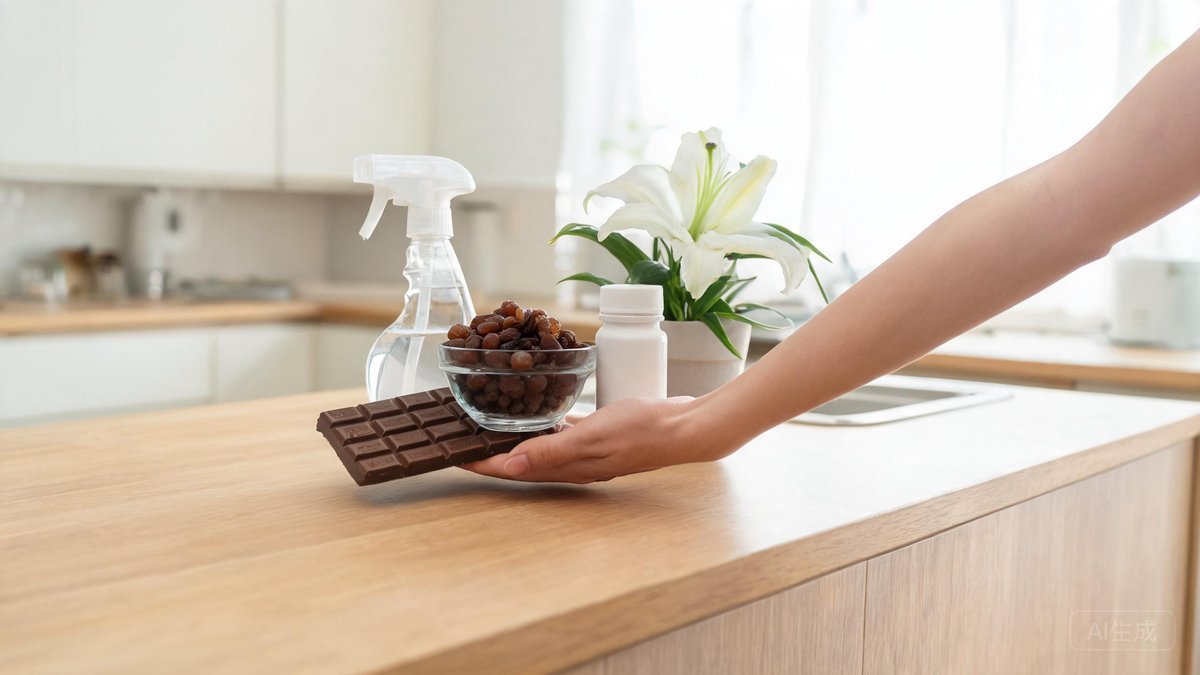
The ASPCA Animal Poison Control Center fields over 400,000 calls every year, and human foods consistently rank among the top three reasons. Chocolate is the one most people know about, but most people underestimate how little it takes. A 20-pound dog eating just two ounces of dark chocolate can experience seizures and cardiac arrhythmia. Baker's chocolate and cocoa powder are even more concentrated. The toxic compounds are methylxanthines, specifically theobromine and caffeine, and dogs metabolize them far more slowly than humans do. Grapes and raisins are a complete wildcard. Some dogs eat a handful and show no symptoms. Others develop acute kidney failure from a single grape. Veterinary researchers have not identified the exact toxin, which makes the risk impossible to predict. Do not gamble. Xylitol, an artificial sweetener found in sugar-free gum, peanut butter, and some baked goods, triggers a massive insulin release in dogs that drops blood sugar to seizure-inducing levels within 30 minutes. At higher doses, it causes liver failure. Check ingredient labels on anything labeled sugar-free. Onions, garlic, chives, and leeks damage red blood cells in both dogs and cats, leading to hemolytic anemia. The effect is cumulative, so a little garlic powder in table scraps every day adds up over weeks. Macadamia nuts cause rear-leg weakness, vomiting, and hyperthermia in dogs, though the mechanism remains unknown. Alcohol and raw bread dough present a double threat. Ethanol is toxic on its own, and raw dough expands in the stomach, causing bloat while fermenting into more alcohol. The safest rule is the simplest one: your pet eats pet food. Treats come from the pet store, not your plate.
Houseplants and Flowers That Send Pets to the Emergency Room
Lilies are the number one plant-related killer of cats, and most cat owners do not know it until they are sitting in an emergency clinic at 2 a.m. Every part of a true lily, including the pollen that dusts onto a cat's fur and gets licked off during grooming, causes acute kidney failure in cats. Tiger lilies, Easter lilies, day lilies, and stargazer lilies all belong on the never-bring-home list. Even the water in a vase that held lilies is toxic. Peace lilies and calla lilies are not true lilies but contain insoluble calcium oxalate crystals that cause intense oral burning, drooling, and difficulty swallowing. Sago palms are deceptively dangerous. Every part of the plant, especially the seeds, contains cycasin, which attacks the liver. A 2021 review in the Journal of Veterinary Emergency and Critical Care found that sago palm ingestion carries a 30 to 50 percent mortality rate in dogs even with aggressive treatment. Aloe vera, often kept on kitchen windowsills for burns, causes vomiting and diarrhea in both dogs and cats. Pothos, philodendron, and dieffenbachia are in nearly every office and living room, and while rarely fatal, they cause painful oral swelling that can obstruct breathing in small pets. Tulip and daffodil bulbs concentrate toxins in the bulb itself, and dogs digging in garden beds sometimes unearth and chew them. Before buying a new plant, search the ASPCA's online toxic and non-toxic plant database. It is free and searchable by species. The takeaway is not that you need a plant-free home. Spider plants, Boston ferns, parlor palms, and orchids are all pet-safe and add just as much green to a room. Choose the safe ones and place even those out of reach when possible. Cats jump, and dogs counter-surf, so shelf placement alone is not a guarantee.
Veterinary Insight: According to Pet Poison Helpline, chocolate, grapes, xylitol, and lilies are among the top pet toxins. Lilies can cause fatal kidney failure in cats within 24-48 hours.
Cleaning Products and Chemicals You Must Lock Away
Pets walk on floors, lick their paws, and drink from toilet bowls. They interact with household chemicals in ways humans never do. Bleach-based cleaners, when still wet on surfaces, cause chemical burns on paw pads and oral mucosa. Even after drying, residue remains that transfers during grooming. The Pet Poison Helpline reports that toilet bowl cleaners are among the most common ingestion calls for cats, who are drawn to water sources. A toilet bowl insert releases chemicals continuously, turning every drink into a low-grade poisoning event. Keep lids closed or, better yet, switch to enzyme-based bowl cleaners that are tasteless and nontoxic. Laundry pods and dishwasher tabs concentrate detergents into small, colorful packets that look exactly like toys to a dog. The burst of foam when bitten can be aspirated into the lungs, causing chemical pneumonitis. Store all pods in cabinets with childproof latches. Antifreeze spills in garages and driveways deserve special attention. Ethylene glycol tastes sweet, and a single teaspoon can kill a cat. Newer propylene glycol formulations are less toxic but still dangerous. Check under your car for greenish puddles regularly. Rodenticides pose a hidden threat because pets are exposed through secondary poisoning. A dog or cat that eats a poisoned mouse ingests the anticoagulant rodenticide concentrated in the rodent's liver. If you have pets and need rodent control, use snap traps or electronic traps. Never use bait stations in any area a pet can access, even inside walls, because poisoned rodents wander out before dying. Essential oils diffused into the air concentrate on a pet's fur and get ingested during grooming. Tea tree, peppermint, wintergreen, and eucalyptus oils are particularly toxic to cats, who lack the liver enzyme to process phenolic compounds. Diffuse in rooms your pet cannot enter, or skip diffusion entirely.
Over-the-Counter and Prescription Medications That Harm Pets
Human medications top the ASPCA's list of pet poisoning calls every single year, and most cases involve pills dropped on the floor or bottles left on nightstands. A single 200 mg ibuprofen tablet can cause stomach ulcers and acute kidney failure in a 10-pound dog. Acetaminophen is even worse for cats. A cat's liver cannot break down acetaminophen, resulting in methemoglobinemia, where red blood cells lose their ability to carry oxygen. The gums turn brown, the cat struggles to breathe, and death follows within 24 to 72 hours without immediate treatment. Naproxen is roughly 10 times more toxic to dogs than ibuprofen. ADHD medications like Adderall and Ritalin are amphetamines that cause tremors, seizures, and hyperthermia in dogs. Antidepressants, particularly SNRIs and SSRIs, can trigger serotonin syndrome with symptoms ranging from agitation and vocalization to full-body rigidity. Birth control pills and hormone replacement therapies are less acutely dangerous but still warrant a vet call because the estrogen and progesterone in them can cause bone marrow suppression with prolonged exposure. Never give your pet any human medication unless your veterinarian explicitly prescribes it at a specific dose. The fact that a drug is safe for humans says nothing about its safety for animals. A 500 mg acetaminophen is a standard adult dose for you and a fatal overdose for your cat. Store all medications, including veterinary prescriptions that come in flavored chewable forms, in a cabinet your pet cannot reach. Flavored heartworm chews and joint supplements taste like treats to dogs, and an entire bottle consumed in one go turns a preventative into an overdose. Count your pills. If one goes missing and you own a dog that eats anything, call your vet before symptoms appear. The window for decontamination through induced vomiting closes within one to two hours of ingestion.
Build a Pet-Safe Home Without Sacrificing Comfort or Style
Poison-proofing a home does not mean turning your living room into a sterile, plant-free box. It means rearranging risks to places your pet cannot reach and swapping dangerous products for functionally identical safe alternatives. Install magnetic childproof cabinet locks on every lower cabinet in the kitchen and bathroom. They take 15 minutes to install and cost under 20 dollars for a multi-pack. Move all houseplants to hanging baskets or wall-mounted shelves above head height. If your cat is a determined climber who treats shelves as stepping stones, replace toxic plants with spider plants and Boston ferns that cause no harm if chewed. In the garage, store antifreeze, windshield washer fluid, and paint thinners on high shelves, not on the floor where a curious dog noses around. Place a drip pan under your car to catch leaks. Switch from chemical-based floor cleaners to steam mops, which sanitize with heat alone and leave zero residue for pets to walk through and ingest. In the bathroom, replace toilet bowl chemical inserts with an enzyme-based cleaner or simply keep the lid down. Dispose of old medications by taking them to a pharmacy take-back program rather than tossing them in a trash can a dog can knock over. In the kitchen, get a locking trash can or store the bin in a pull-out cabinet. A startling number of toxicity cases involve dogs eating moldy food, chicken bones, corn cobs, and food packaging from an unsecured garbage can. A 30-dollar locking bin prevents a 3,000-dollar foreign body surgery. The most effective strategy is also the simplest. Get on your hands and knees and see the world from your pet's height. What is within reach? What smells interesting? What looks like a toy? Remove it, lock it, or swap it. You cannot train curiosity out of an animal. You can make sure that curiosity never encounters anything lethal.
What to Do If Your Pet Ingests Something Toxic
When you see your dog eating a bar of dark chocolate or your cat licking spilled lily pollen, the next five minutes decide the outcome. Do not induce vomiting unless a veterinarian tells you to. Hydrogen peroxide, the common at-home emetic, can cause severe stomach irritation and aspiration pneumonia if dosed incorrectly. Certain substances, like cleaning products and petroleum distillates, cause more damage coming back up than they did going down. Call the ASPCA Animal Poison Control Center at 888-426-4435 or the Pet Poison Helpline at 855-764-7661 immediately. Both services charge a consultation fee, typically around 75 to 85 dollars, and they will open a case, calculate the toxic dose based on your pet's weight and the substance ingested, and tell you whether to go to the vet or monitor at home. Have the following ready when you call: your pet's species, breed, age, and exact weight, the substance ingested with the packaging in front of you, the approximate amount consumed, and how long ago it happened. If your pet has already vomited, note the appearance and save a sample in a plastic bag. If the poison center tells you to go to an emergency vet, do not drive yourself if you are panicking. Bring the packaging, any vomit samples, and your pet's medical records if available. At the clinic, activated charcoal is often the first line treatment. It binds to toxins in the gastrointestinal tract before they enter the bloodstream. IV fluids flush toxins through the kidneys and support blood pressure. In severe cases, lipid emulsion therapy acts as a sink for fat-soluble toxins like ivermectin and certain antidepressants. The survival statistics are strongly on your side when you act immediately. A 2022 analysis of ASPCA poison center cases found that pets treated within 30 minutes of ingestion had a survival rate above 95 percent. Pets whose owners waited until symptoms appeared had a survival rate of roughly 60 percent. The lesson could not be clearer. Hesitation kills. Speed saves. Program the poison control number into your phone before you need it.