Table of Contents
More pet owners are traveling with their animals than ever before. According to the American Pet Products Association, 78% of pet owners now travel with their pets each year, up from 54% in 2019. Hotels, airlines, and even restaurants have responded -- but navigating the maze of pet policies, safety requirements, and logistics still takes real planning.
A poorly planned trip with your dog or cat can turn into a stressful mess fast. A well-planned one creates memories you will have for a lifetime. This guide covers every mode of travel, from car rides to cross-country flights, so you can focus on the adventure instead of the anxiety.
Pre-Trip Planning: What to Do Before You Leave
The difference between a smooth trip and a disaster is what you do in the week before departure. Start with the vet. Schedule a wellness check at least 7 to 10 days before your trip. Make sure your pet is up to date on all vaccinations, and ask for a copy of their medical records and a health certificate if you are crossing state lines or flying. Some airlines require a health certificate issued within 10 days of travel.
Update your pet's ID tags with your current phone number, and confirm that their microchip registration has your correct contact information. A breakaway collar with a tag is your first line of defense if your pet gets loose in an unfamiliar place. Pack a recent printed photo of your pet -- it is far more useful than scrolling through your phone if you need to make "lost pet" posters quickly.
Research veterinary clinics at your destination before you leave. Write down the address and phone number of the nearest 24-hour emergency vet and save it in your phone alongside your regular vet's number. You do not want to be searching for this information at 2 AM when your dog has eaten something they should not have.
Car Travel with Pets: Safety Comes First
An unrestrained dog in a car crash becomes a projectile. At just 30 miles per hour, a 60-pound dog generates 2,700 pounds of force on impact -- enough to seriously injure or kill both the dog and the human passengers. Yet a 2023 survey by Volvo and the AAHA found that only 16% of dog owners use proper restraints when driving.
Choosing the Right Car Restraint
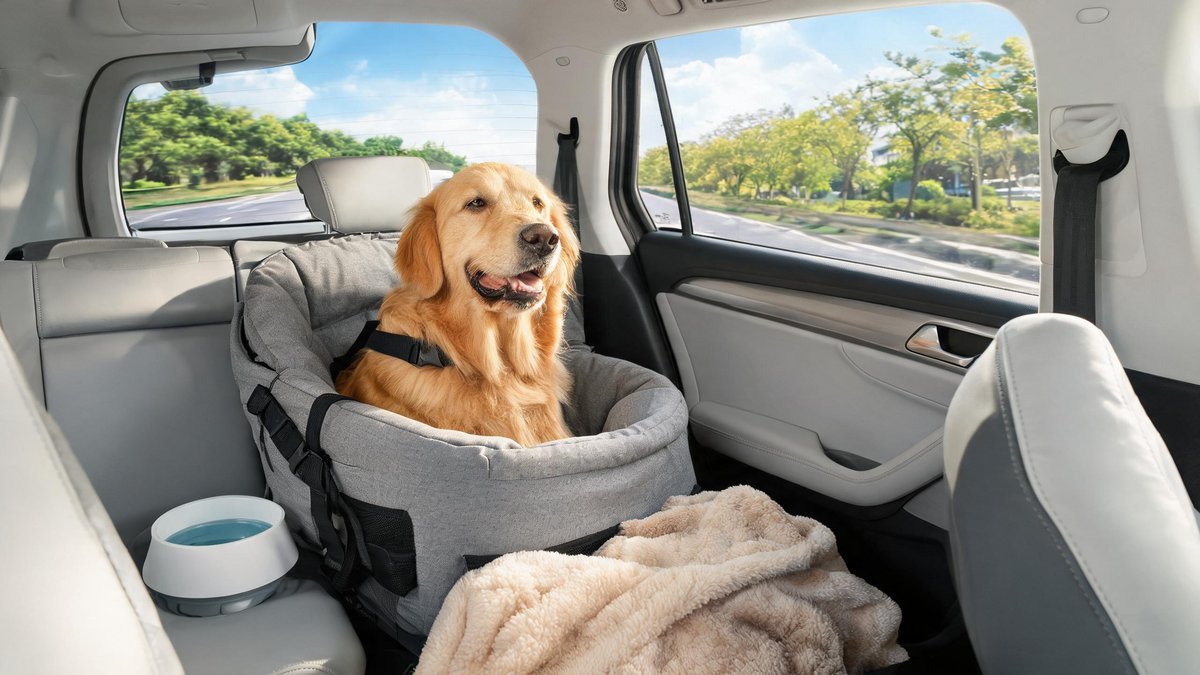
You have three main options: a crash-tested harness that clips into the seatbelt buckle, a hard-sided travel crate secured with ratchet straps, or a back-seat barrier combined with a dog seat belt. Crash-tested harnesses from brands like Sleepypod and Kurgo are the most practical for everyday use. Look for models that have passed independent crash testing -- many products labeled as "safety harnesses" have never actually been tested and will fail under real crash conditions.
Never let your dog ride in the front passenger seat, even in a harness. Airbags deploy at over 200 mph and can kill a dog instantly. The back seat is the safest position. Never let your dog ride with their head out the window at highway speeds -- debris, insects, and even wind pressure can cause serious eye and ear injuries.
Road Trip Comfort and Breaks
Stop every 2 to 3 hours for a potty break, a short walk, and water. Plan your route around pet-friendly rest stops ahead of time using apps like BringFido. Never leave your dog alone in a parked car, even with the windows cracked. On a 75-degree day, the interior temperature can reach 100 degrees in 10 minutes and 120 degrees in 30 minutes. In many states, leaving a pet in a hot car is a criminal offense.
Feed your dog a light meal 3 to 4 hours before departure rather than right before you leave. A full stomach plus motion equals a mess you do not want to clean out of your back seat.
Flying with Your Pet: Airline Rules Explained
Flying with a pet is more complicated and more expensive than driving. Each airline sets its own pet policy, and these policies change frequently. Always check the airline's current pet travel page before booking -- do not rely on information from third-party sites or even your own past experience.
Small dogs and cats that fit in a carrier under the seat (typically under 20 pounds including carrier) can fly in the cabin on most major US airlines for a fee of $95 to $125 each way. Carriers must be soft-sided, ventilated on at least three sides, and small enough to fit completely under the seat in front of you. Standard dimensions are roughly 18.5" x 8.5" x 13.5", but verify with your specific airline.
Larger dogs must travel in the cargo hold as checked baggage, which costs $200 to $400 each way. Cargo travel is not available on all flights and is typically suspended during summer months (May through September) on many airlines due to heat risks on the tarmac. Brachycephalic breeds (Pugs, Bulldogs, Persian cats) are banned from cargo travel on virtually all US airlines due to their high risk of respiratory failure during flight. If you have a short-nosed breed, ground transportation is your only safe option.
Book your pet's spot when you book your own ticket. Airlines cap the number of pets per flight -- usually 4 to 6 in-cabin pets per aircraft -- and these slots fill up weeks in advance during holidays and summer months.
Important: As of 2024, the CDC requires all dogs entering the US to be at least 6 months old, microchipped, and accompanied by a completed CDC Dog Import Form. This applies even if your dog is returning from a trip abroad. Check cdc.gov for the most current requirements before any international travel.
Finding and Booking Pet-Friendly Hotels
"Pet-friendly" means different things at different hotels. At some properties, it means your dog is genuinely welcome with treats at check-in, a designated relief area, and no weight restrictions. At others, it means you pay a $150 non-refundable fee for a room that smells like bleach and comes with a list of 12 rules. Read the fine print before you book.
Key questions to ask before booking: What is the pet fee, and is it per night or per stay? Is there a weight limit? Can you leave your pet unattended in the room? Is there a designated potty area on the property? Are pets allowed in common areas or restricted to the room? Call the hotel directly to confirm -- the front desk often has more up-to-date and lenient information than the corporate website.
Major chains with consistently good pet policies include Kimpton Hotels (no pet fee, no weight limit, all pets welcome), Aloft Hotels (dogs under 40 lbs, no fee), Red Roof Inn (one pet free per room), and Motel 6 (free for well-behaved pets at most locations). For independent and boutique options, BringFido and GoPetFriendly maintain searchable databases of verified pet-welcoming properties.
Your Pre-Travel Checklist
Use this checklist 48 hours before departure to make sure nothing gets forgotten:
- Food and water bowls (collapsible silicone bowls save space)
- Enough regular food for the entire trip plus 2 extra days (switching foods suddenly on the road causes diarrhea)
- Medications with written dosing instructions
- Vaccination records and health certificate (printed copy, not just on your phone)
- Pet first-aid kit: gauze, antiseptic wipes, tweezers, styptic powder, vet wrap
- Leash, harness, and a backup leash (leashes break at the worst moments)
- Waste bags -- bring twice as many as you think you will need
- Favorite bed or blanket (familiar scent reduces anxiety in new places)
- 2-3 favorite toys (new toys will not comfort an anxious pet -- bring the ones they already love)
- Crate or carrier, even if your pet does not use one at home (hotel rooms have hiding spots you cannot block)
- Calming aids if recommended by your vet (Adaptil spray for dogs, Feliway wipes for cats)
- Printed photo of your pet and a copy of their microchip number
Handling Travel Anxiety in Pets
Many pets find travel stressful, and stress manifests as panting, drooling, whining, vomiting, or attempting to escape. Start desensitization training at least 3 to 4 weeks before your trip. Put the carrier or travel crate out in your living room with the door open and treats inside. Feed meals near it. Take short practice drives that end at a park or somewhere fun, not just the vet.
For pets with moderate to severe travel anxiety, talk to your vet about prescription options. Trazodone and gabapentin are commonly prescribed for situational anxiety and are generally well-tolerated. Never use over-the-counter sedatives like Benadryl without your vet's approval -- the dosing is different for pets, and some formulations contain ingredients toxic to dogs.
On travel day, exercise your pet before you leave. A tired dog is a calm dog. A 30-minute walk or a vigorous play session before departure makes a noticeable difference in how they handle the next several hours of confinement.